GET 10% OFF ON ORDERS OF $500+ PROMO CODE: WEB-10

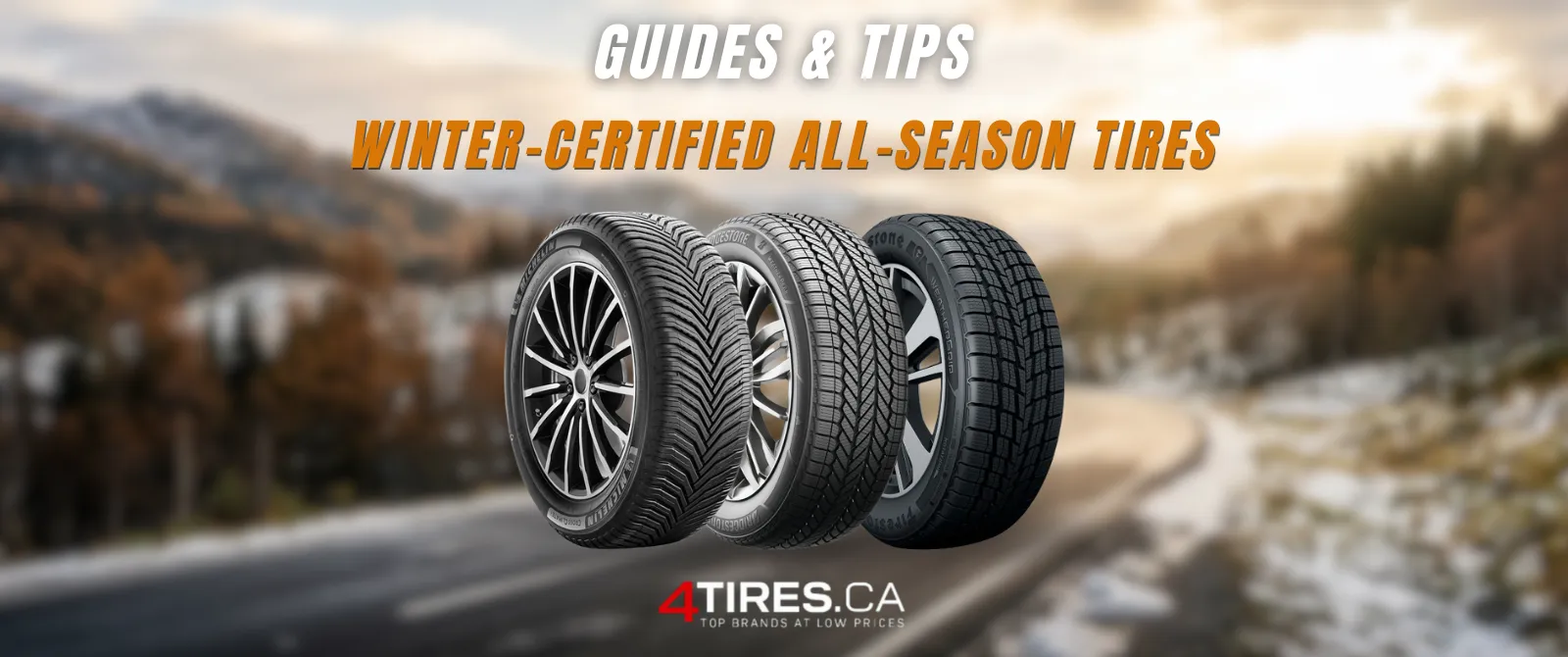
Winter-certified all-season tires, identified by the mountain and snowflake symbol, offer a versatile solution for year-round driving in Canada. They allow you to comply with winter regulations while avoiding seasonal tire changes, making them a practical and cost-effective option for many drivers.
However, their performance remains a compromise: less effective than a winter tire on ice and less efficient than a summer tire in hot weather. By choosing discount tires suited to your usage, especially for urban or moderate driving, you can benefit from a good balance between comfort, safety and durability all year long.
What are the best all-weather tires approved for winter?The best models vary depending on your vehicle and driving style. Well-known brands generally offer better grip and durability. Check out our selection of best all-weather tires approved for winter to find the top options based on your budget. Are all-weather tires approved for winter good in winter?Yes, they are winter-certified thanks to the mountain/snowflake symbol. They generally provide good traction in deep snow, comparable to some traditional winter tires, which can make them seem like a year-round solution. However, their braking performance is weaker on ice and in very cold temperatures, as the rubber becomes stiffer. In Canadian winter conditions, a true winter tire remains more effective, even in entry-level models. All-weather tires approved for winter or winter tires: which should you choose?Winter tires remain the safest option on icy roads and in harsh winter conditions. All-weather tires approved for winter are a practical compromise to avoid seasonal changes and work well for urban driving, but they cannot match winter tires in extreme conditions. What is the price of all-weather tires approved for winter?Prices vary depending on brand, size, and category. There are budget options as well as premium models. Compare discount tires online to get the best value for your money. Is it legal to drive with all-weather tires approved for winter across Canada?Yes, all-weather tires approved for winter (mountain/snowflake symbol) are recognized across Canada, but requirements vary by province. In Quebec, they are mandatory from December 1 to March 15. In British Columbia, they are required on certain roads during winter (M+S or mountain/snowflake) from October 1 to April 30. In the rest of Canada (Ontario, Alberta, etc.), they are not mandatory but strongly recommended for safety.They are therefore legal everywhere, but may be required depending on local regulations. What is the difference between all-season tires and all-weather tires approved for winter?Regular all-season tires are not designed for Canadian winters. Winter-approved all-weather tires use a rubber compound adapted to cold temperatures and provide better traction on snow. Where can you buy all-weather tires approved for winter at the best price?Buying online gives access to a wider inventory and more competitive prices. Easily compare models on 4Tires.ca and benefit from fast delivery across Canada. Are all-weather tires approved for winter good year-round?Yes, they are designed for both summer and winter driving. They offer good versatility, but slightly lower performance compared to tires specialized for each season. How long do all-weather tires approved for winter last?Their lifespan depends on usage, but since they are used year-round, they generally wear faster than having two seasonal sets. Which all-weather tires approved for winter should you choose for your vehicle?The choice depends on your vehicle type (SUV, car, truck), driving habits, and budget. Use our search tool to find the models perfectly suited to your needs. |
BF GOODRICH
BRIDGESTONE
CONTINENTAL
FIRESTONE
GOOD YEAR
MAZZINI
SAILUN
YOKOHAMA