
All-Weather vs. All-Season Tires: Which Should You Choose in Canada?
Driving conditions in Canada can change quickly. Between spring thaws, heavy rain, summer heat and winter snowstorms, choosing the right tires for your vehicle can become complicated.
One question comes up frequently: what is the difference between an all-season tire and a winter-approved all-weather tire?
Despite their similar names, these two tire categories do not provide the same performance when temperatures drop. This guide explains how to tell them apart and choose the right option for your region and driving habits.
In short: a conventional all-season tire is primarily designed for spring, summer and fall. A winter-approved all-weather tire carries the 3PMSF symbol and can legally be used during winter in Quebec.
1. All-season tires: primarily designed for three seasons
A conventional all-season tire is primarily designed for spring, summer and fall. It generally provides a good balance of comfort, durability, handling and water evacuation.
Its name can be misleading, however. Most conventional all-season tires are not designed to handle severe Canadian winter conditions.
Rubber compound
The rubber compound used in an all-season tire is designed to withstand summer heat and provide good tread life. When temperatures fall below approximately 7°C, the rubber gradually begins to harden, which can reduce traction on cold pavement.
Winter performance
An all-season tire may provide limited traction during light snowfall, but its tread pattern generally has fewer sipes and winter-specific features than a tire approved for winter use.
On packed snow, ice or in extreme cold, it therefore provides less traction than a winter-approved all-weather tire or a dedicated winter tire.
The M+S marking
Most all-season tires carry the M+S marking, which stands for Mud and Snow. This marking is primarily based on the geometry of the tread pattern. It does not necessarily mean that the tire has passed a standardized snow-performance test.
Important: in Quebec, the M+S marking alone does not qualify a tire as a legally compliant winter tire.
2. Winter-approved all-weather tires: a year-round option
A winter-approved all-weather tire is designed to perform across a wider range of temperatures. It combines certain characteristics of a conventional all-season tire with features normally found on a winter tire.
It can therefore be used throughout all four seasons while providing better traction on snow and cold pavement than a conventional all-season tire.
Rubber compound
Its rubber compound is formulated to remain more flexible as temperatures drop. It also remains sufficiently stable for use during warmer months.
This compromise allows drivers to use the same set of tires throughout the year. Because its rubber is generally softer than that of a conventional all-season tire, however, it may wear faster during periods of extreme heat.
Tread design
Winter-approved all-weather tires generally feature:
- more sipes to grip snow;
- grooves designed to evacuate water and slush;
- tread blocks designed for cold pavement;
- a tread pattern suitable for both summer and winter use.
Winter certification
A genuine winter-approved all-weather tire carries the 3PMSF symbol, which represents a three-peaked mountain containing a snowflake.
This symbol distinguishes a conventional all-season tire from a tire that has met a standardized snow-traction requirement.
3. What does the 3PMSF symbol mean?
3PMSF stands for Three-Peak Mountain Snowflake. It refers to the symbol showing a snowflake inside a mountain with three peaks.
To carry this symbol, a tire must meet a standardized snow-performance requirement. The 3PMSF symbol therefore provides a more reliable indication of winter capability than the M+S marking alone.
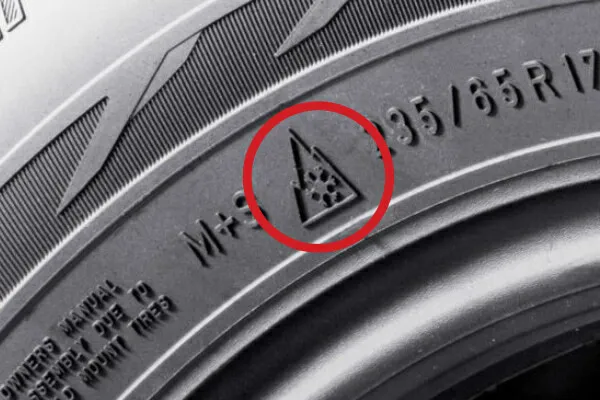
How can you recognize a winter-approved tire?
Look for the symbol showing a snowflake inside a three-peaked mountain on the tire’s sidewall. The product page should also display the 3PMSF or winter-approved designation.
Quebec compliance
In Quebec, a tire carrying the 3PMSF symbol is recognized as compliant for the mandatory winter period. Passenger vehicles covered by the regulation must be equipped with compliant winter tires from December 1 through March 15 inclusively.
British Columbia requirements
In British Columbia, requirements vary according to the road and posted signs. M+S tires may be accepted as winter tires on certain designated routes. However, the province recommends tires carrying the 3PMSF symbol for better traction on snow and ice.
4. What is the difference between M+S and 3PMSF?
| Marking | Meaning | Standardized winter test | Legal status across Canada |
|---|---|---|---|
| M+S only | Mud and Snow | Accepted as the minimum winter-tire marking on designated British Columbia routes when tread-depth requirements are met. Not compliant with Quebec’s winter-tire requirement when used alone. | No |
| 3PMSF | Three-Peak Mountain Snowflake | Yes, standardized snow-traction requirement | Compliant with Quebec’s winter-tire requirement and accepted on designated British Columbia routes. Recommended for severe winter conditions throughout Canada. |
| Compliant studded tire | Additional mechanical traction | Depends on the tire | Use is subject to province-specific dates and restrictions. Studded-tire rules are separate from general winter-tire requirements. |
A tire may carry both the M+S and 3PMSF markings. The 3PMSF symbol confirms that the tire has met a standardized snow-traction requirement, but the legal obligation to use winter tires depends on the province and, in British Columbia, the specific route.
Winter-tire requirements by province
| Province | Passenger-vehicle requirement | Role of M+S and 3PMSF |
|---|---|---|
| Quebec | Winter tires are mandatory for most Quebec-registered passenger vehicles from December 1 through March 15, subject to legal exceptions. | A compliant tire must carry the prescribed mountain-and-snowflake pictogram or qualify as a permitted studded tire. M+S alone is not sufficient. |
| British Columbia | Winter tires or chains are required on designated routes, generally from October 1 through March 31 or April 30 depending on the route. | M+S and 3PMSF tires can both meet the legal winter-tire definition when they have at least 3.5 mm of tread. The 3PMSF marking indicates stronger tested snow performance. |
| Alberta, Saskatchewan and Manitoba | No province-wide winter-tire requirement applies generally to passenger vehicles. Winter tires remain strongly recommended for winter driving. | The 3PMSF marking identifies a tire tested for severe snow conditions; M+S does not provide the same standardized performance assurance. |
| Ontario, New Brunswick, Nova Scotia, Prince Edward Island and Newfoundland and Labrador | No province-wide winter-tire requirement applies generally to passenger vehicles. Drivers should still equip their vehicles for local weather and road conditions. | The 3PMSF marking provides the clearer indication of tested snow traction. Rules governing studded tires vary by province. |
Provincial rules, designated routes and permitted studded-tire periods can change. Drivers should verify current provincial requirements before travelling.
5. What is the Ice Grip symbol?
The Ice Grip symbol is different from the 3PMSF symbol. It indicates that a tire has met a standardized braking-performance requirement on ice.
This marking is primarily found on certain winter tires designed for Nordic conditions. It does not replace the 3PMSF symbol and is not found on every winter tire.
Most winter-approved all-weather tires carry the 3PMSF symbol but do not necessarily have the Ice Grip symbol. A dedicated winter tire may therefore remain the better choice for regions that frequently experience icy roads and extreme cold.
6. Comparison of the three tire types
| Tire type | Intended temperatures | Rain | Light snow and slush | Ice and extreme cold | 3PMSF |
|---|---|---|---|---|---|
| All-season tire | Primarily above 7°C | Very good | Limited | Not recommended | Generally no |
| Winter-approved all-weather tire | Year-round use | Very good | Good | Acceptable depending on the model and conditions | Yes |
| Dedicated winter tire | Primarily below 7°C | Good | Excellent | Best choice | Yes |
Exact performance varies according to the tire model, wear, tread depth, temperature and road conditions.
7. Which type of tire should you choose?
The right choice depends on your region, annual mileage and the conditions in which you regularly drive.
Choose conventional all-season tires if:
- you do not drive in winter conditions;
- you use a separate set of dedicated winter tires;
- you want good durability during warmer months;
- you primarily drive during spring, summer and fall.
For most Quebec drivers, conventional all-season tires must be replaced with compliant winter tires before the mandatory winter period.
Choose winter-approved all-weather tires if:
- you want to use the same set of tires throughout the year;
- you primarily drive in urban or suburban areas;
- roads in your area are generally cleared quickly;
- your annual mileage is moderate;
- winters in your region are relatively moderate;
- you want to avoid two seasonal tire changes each year.
This option may suit drivers who primarily encounter rain, light snow, slush and temperatures that fluctuate around 0°C.
Discover our best winter-approved all-weather tires
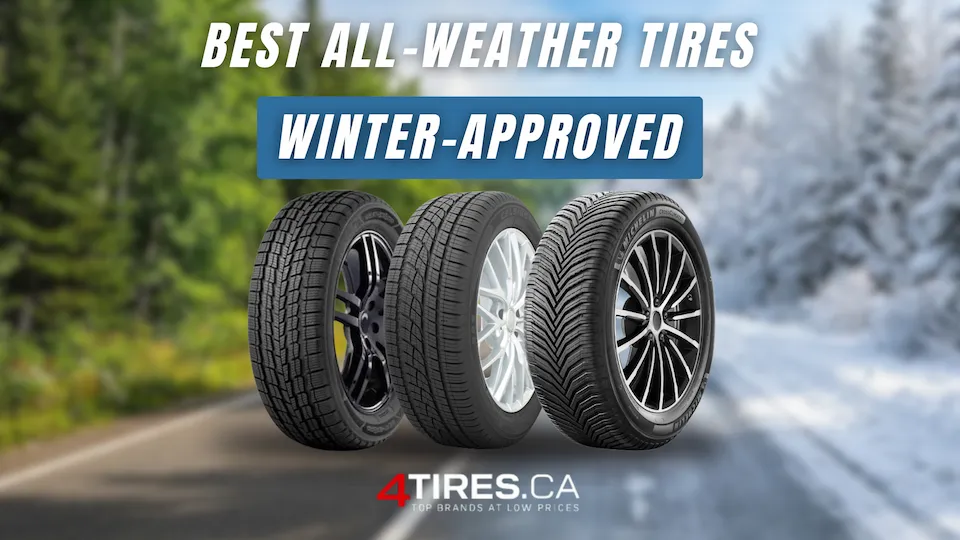
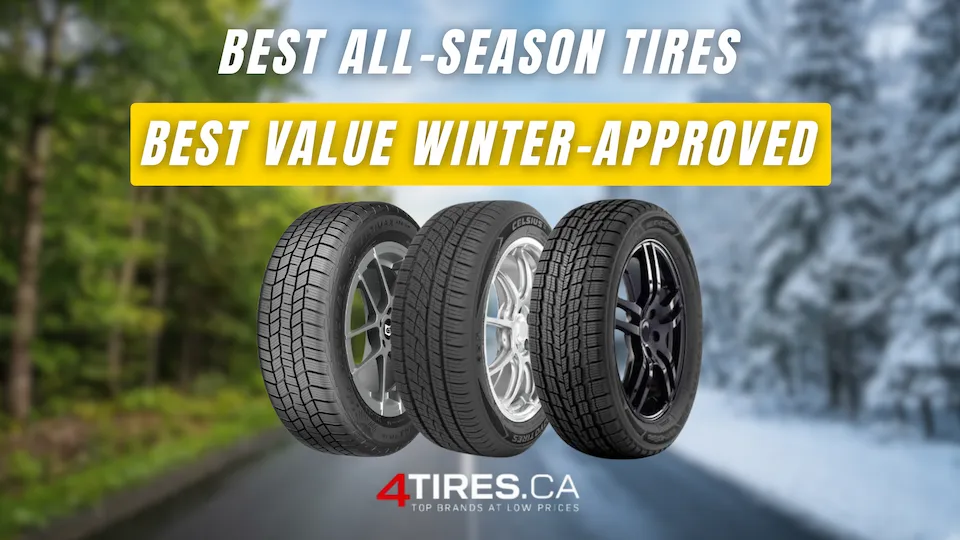
Choose dedicated winter tires if:
- you frequently drive on packed snow or ice;
- you live in a rural, mountainous or remote area;
- your region regularly experiences very low temperatures;
- you must drive even during severe winter weather;
- you want the highest possible level of winter traction.
Discover our best winter tires
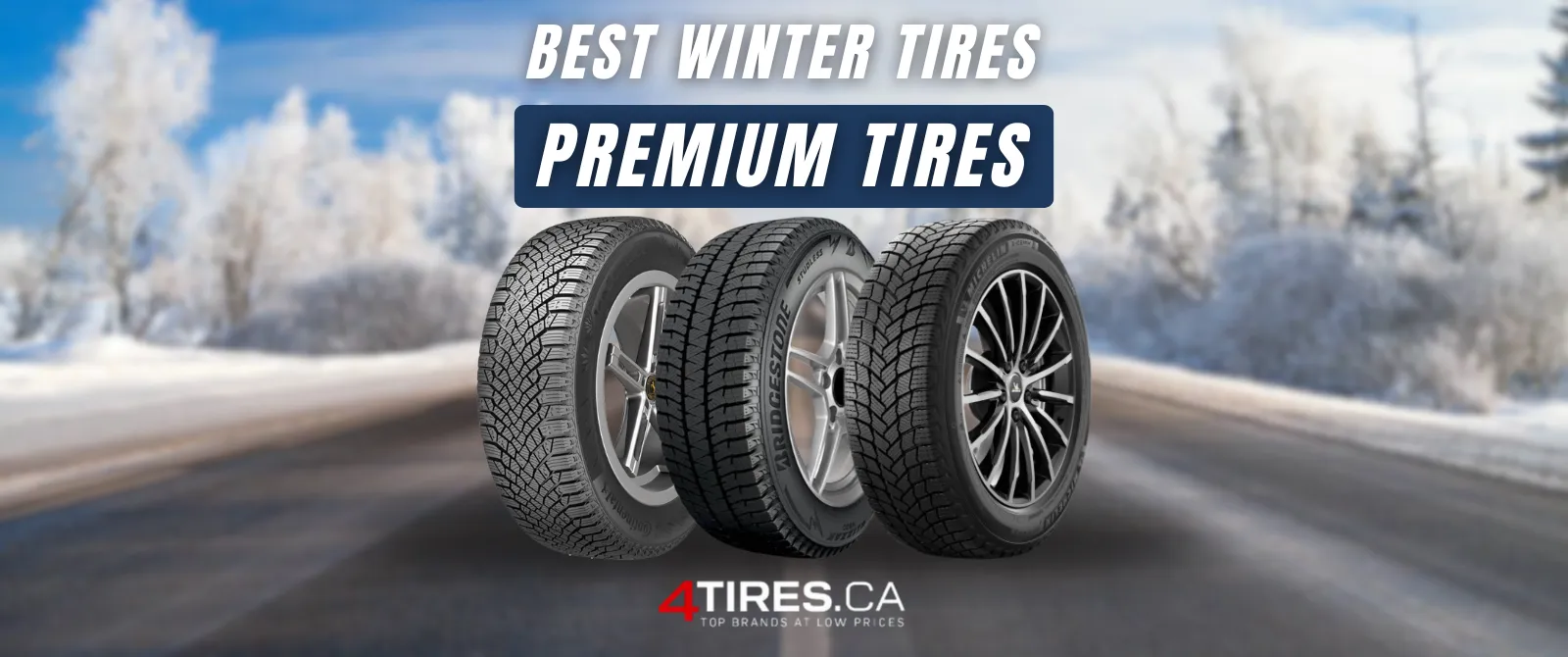
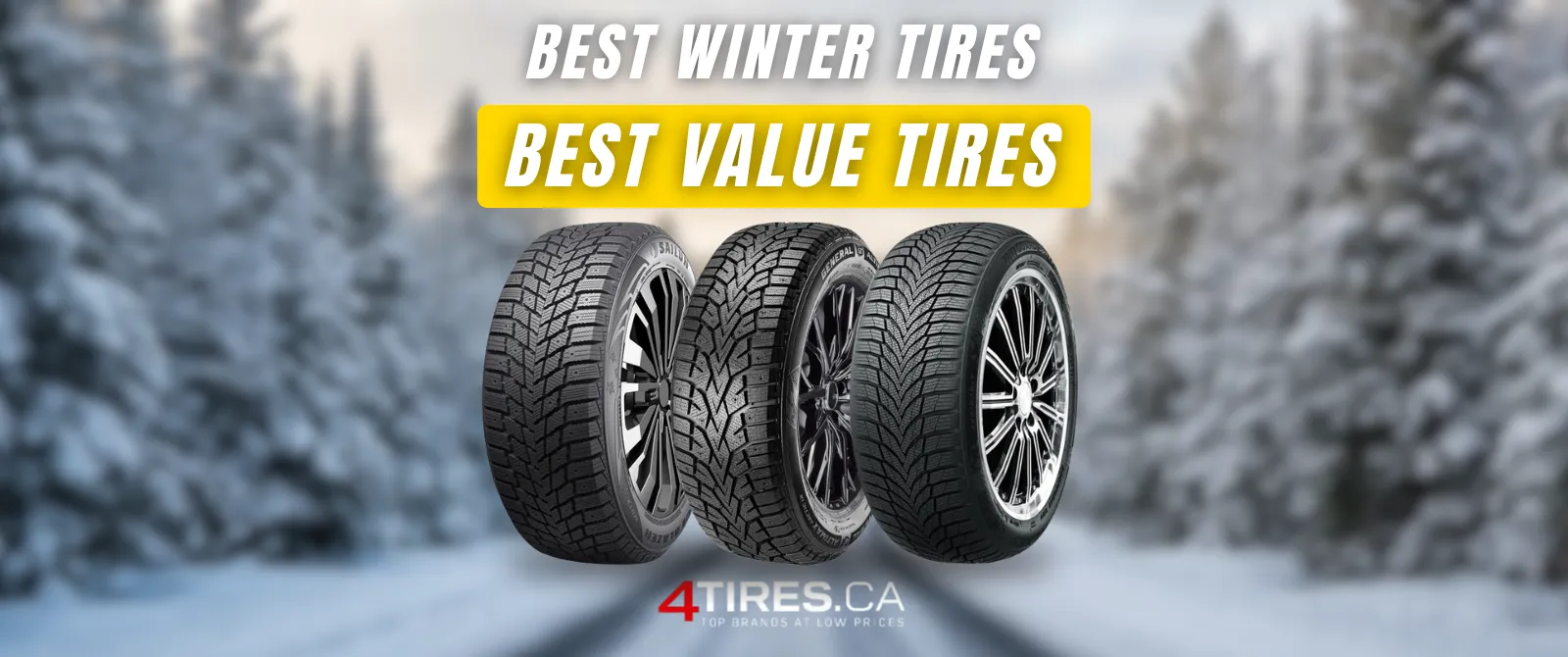
For electric vehicles, SUVs and pickup trucks: verify that the tire size, load index, speed rating and other specifications meet the vehicle manufacturer’s requirements.
8. All-weather or dedicated winter tires: which is the better choice?
A winter-approved all-weather tire offers a practical compromise. It allows you to use one set throughout the year and provides better winter capability than a conventional all-season tire.
A dedicated winter tire remains better suited to difficult winter conditions. Its rubber compound, sipes and tread pattern are specifically designed to maximize traction when temperatures are low and roads are covered with snow or ice.
Winter-approved all-weather tires are therefore best suited to moderate winter conditions. Dedicated winter tires remain the strongest choice for severe Canadian winters.
9. How can you identify the right tire on our website?
Before ordering, verify the following:
- the presence of the 3PMSF symbol for a winter-approved tire;
- the tire size recommended for your vehicle;
- the load index;
- the speed rating;
- the vehicle type;
- the model’s specific features;
- availability in your required size.
You can then compare tires according to price, warranty, estimated tread life and intended use.
Find the right tires for your vehicle
Browse our selection of all-season tires, winter-approved all-weather tires and dedicated winter tires. Search by vehicle or tire size to find compatible models, compare prices and choose the tires best suited to your driving conditions.
